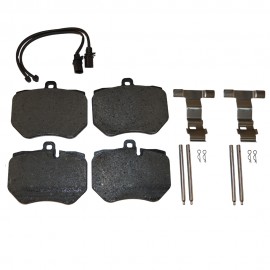

Bentley Continental Supersports & GT Rear Carbon Ceramic Brake Pad Set - 3W0698451E
Description
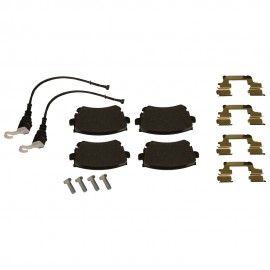
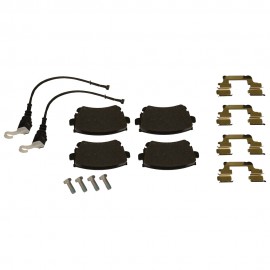
Precision Friction for the World’s Most Powerful Grand Tourer Designed exclusively for the Bentley Continental Supersports and models optioned with the Carbon Silicon Carbide (CSiC) braking package, these Genuine Rear Brake Pads (Part # 3W0698451E) are engineered to withstand the extreme temperatures generated by high-performance driving. Unlike standard pads, this ceramic-specific friction material is designed to work in perfect harmony with carbon rotors, providing immense bite without the abrasive wear patterns associated with inferior compounds. These pads offer nearly zero brake dust and a massive reduction in unsprung weight, maintaining the "Magic Carpet" ride quality while ensuring track-ready stopping power.
Model Fitment:
-
Bentley Continental Supersports: 2009–2011 & 2017–2018
-
Bentley Continental GT / GTC Speed: 2003–2018 (With Carbon Brake Option)
-
Bentley Continental Flying Spur: 2005–2019 (With Carbon Brake Option)
-
Note: ONLY for vehicles with factory Carbon Ceramic Brakes. Not compatible with standard Cast Iron rotors.
Technical Details:
-
Placement: Rear Axle (Complete Set).
-
Rotor Compatibility: Carbon Silicon Carbide (CSiC).
-
Condition: Brand New Genuine Bentley.
-
Supersessions: 3W0698451B, 3W0698451F, 3W0698451G, 3W0698451H.
Tech Install Tip: Carbon ceramic rotors are exceptionally durable but physically fragile; use extreme caution when sliding the caliper over the rotor to avoid chipping the disc edge. Critical: Always check the "protrusion" of the wear indicator pins. If your vehicle is driven on track, the pads should be replaced at 50% wear to prevent excessive heat transfer into the ceramic rotor surface, which can lead to expensive disc oxidation.